Last updated 2026-07-24
TL;DR
A simple forest management plan is a written document describing your woodland's condition, your goals, and a schedule of practices (thinning, harvest, wildlife work) over 5-15 years. Most state current-use programs require one, often written or stamped by a licensed forester, before you enroll. Costs typically run $500 to $3,000 depending on acreage and state.
What is a forest management plan, in plain terms
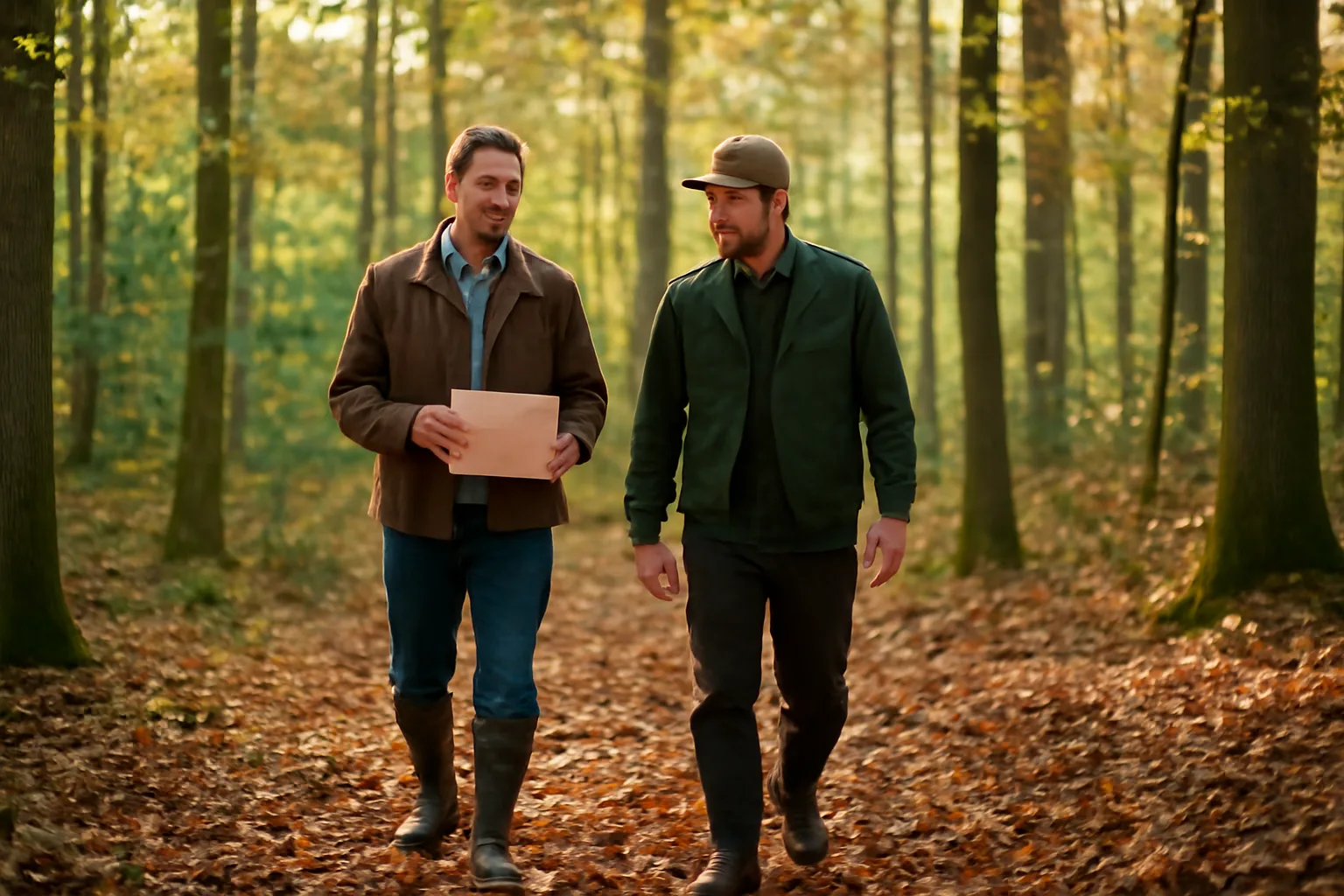
A forest management plan is a written document that lays out what's on your land, what you want from it, and what you (or a forester) plan to do about it over time. Think of it as a roadmap with three parts: a description of the property (soils, timber types, ages, access), a set of goals (timber income, wildlife habitat, recreation, just keeping it wooded), and a schedule of activities tied to those goals over roughly 5 to 15 years. It's not a legal contract and it's not a guarantee of anything. It's a planning document. Most state current-use or forest-tax programs require one because the tax break is premised on active management, more than owning trees and doing nothing. A truly simple plan for a 20-acre woodlot might run 8 to 15 pages: a locator map, a stand map with two or three timber types, a paragraph on your goals, and a table of recommended activities by year. A plan for 200 acres with multiple stand types and a timber sale planned gets longer and more technical, sometimes 30+ pages with stocking tables and volume estimates. The US Forest Service describes forest management planning as balancing "resource use with sustainability," which sounds abstract until you realize it just means: don't cut it all at once, and write down why you're doing what you're doing. [1]
What is the Forest Management Bureau (and do I need to contact one)
There's no single national "Forest Management Bureau." What people usually mean is their state's division of forestry, sometimes literally named a "Forest Management Bureau" or "Bureau of Forestry," that administers state land management, cost-share programs, and current-use tax enrollment. Pennsylvania, for example, has a Bureau of Forestry within the Department of Conservation and Natural Resources that oversees both state forest management and private landowner assistance. [2] If you're searching for this term, you probably want your state forestry agency, the office that approves current-use plans, connects you with a service forester, or runs a stewardship program. Every state has some version of this office, though the name varies: Division of Forestry, Forest Service, Department of Natural Resources forestry section, or Bureau of Forestry. Start there, not with a generic web search, because your state's specific plan requirements and approved forester list live on that agency's site. Many states also offer a free or low-cost visit from a state service forester who can walk your land and point you toward next steps, even before you hire a private consulting forester to write the formal plan. That first visit is worth scheduling regardless of whether you enroll in a tax program; it costs you nothing but time in most states.
Does my state require a licensed forester to write the plan
Often, yes, but it varies by program and by whether you want the plan to also qualify for tax enrollment. Some states require the plan be prepared or certified by a licensed or registered forester. Others let a landowner write a basic plan themselves for smaller acreages, or accept a plan from a state service forester at no charge. Vermont's Use Value Appraisal program, for instance, requires a forest management plan prepared according to program standards and generally involves a licensed forester certifying the plan meets requirements. [3] New York's 480a Forest Tax Law program similarly requires a management plan approved by the Department of Environmental Conservation, prepared to specific standards. [4] Don't assume your state's rule from a neighbor's experience or a forum post. Confirm with your state forestry agency and county assessor what your specific program requires, because acreage thresholds, forester licensing rules, and renewal periods differ by state and sometimes by county. If your state requires a licensed forester's stamp, budget for that professional engagement; a landowner-written plan won't satisfy the requirement no matter how thorough it is. For background on how these state programs generally work before you commit to hiring anyone, see our overview of forest management programs by state.
What does a simple forest management plan actually include
| Property description | Acreage, location, legal description, access, soils | 1-2 pages | |
|---|---|---|---|
| Landowner goals | Timber income, wildlife, recreation, aesthetics, conservation | half page | |
| Stand inventory | Timber types, ages, stocking, species mix, per stand or per management unit | 2-5 pages | |
| Management recommendations | Thinning, harvest timing, regeneration, invasive control | 3-8 pages | |
| Activity schedule | Year-by-year table of planned practices | 1 page | |
| Maps | Aerial/topo map with stand boundaries, access roads, streams | 2-3 maps | A genuinely simple plan skips volume tables and detailed stocking charts if the program doesn't require them, and focuses on the stand map and the activity schedule. That's usually enough for a 10-40 acre property enrolling for tax purposes only, with no active timber sale planned in the near term. If you're planning an actual harvest in the plan period, expect the forester to add merchantable volume estimates and possibly a stumpage value range, since that data supports both your harvest decision and your eventual tax reporting. See timber management for more on how harvest planning ties into a management plan. |
Most programs and most competent foresters build a plan around the same core sections, even when the format differs by state. | Section | What it covers | Typical length |
How much does a forest management plan cost
Costs vary widely by state, acreage, and whether a state service forester writes it for free or a private consultant does it for a fee. As a rough range, expect $500 to $3,000 for a straightforward plan on 10-100 acres, with per-acre costs often dropping as acreage increases. Some states subsidize part of the cost through cost-share programs tied to the Environmental Quality Incentives Program or state stewardship funding; confirm current cost-share availability with your state forestry agency, since funding levels change year to year. Several states also offer free plans through their service forester program for landowners enrolling in current-use, though these are often more basic and may come with longer wait times (sometimes many months) because service foresters cover large territories with limited staff. If you need a plan quickly to hit an enrollment deadline, a private consulting forester is usually the faster (and costlier) route. One honest caveat: nobody publishes solid national data on average plan cost, because pricing is set locally by individual foresters and varies with travel distance, terrain, and whether a timber cruise is included. Get two or three quotes from foresters on your state's approved list rather than assuming any single number applies to your property.
How do I get a forest management plan started
Start by contacting your state forestry agency and asking two things: does my county's current-use program require a plan, and does the state maintain a list of approved or licensed consulting foresters. Most states publish exactly this list on their forestry agency website. From there, a typical sequence looks like this: request a free service forester visit if your state offers one, get a written referral or program requirements sheet, get quotes from two or three private foresters if a licensed plan is required, walk the property with your chosen forester so they see access points and boundary issues firsthand, and set a realistic timeline (often 4-12 weeks from site visit to finished plan, longer during busy fall and spring seasons). Bring your deed, a rough map or GPS boundary if you have one, and a clear sense of your own goals before that first walk-through. A forester who knows you want mostly wildlife habitat and occasional firewood will write a very different plan than one who thinks you want maximum timber income, even on the identical acreage. Our forestmanagement guide and forestry management overview go deeper on program-specific enrollment steps if you're doing this as part of a current-use application rather than for general stewardship.
How are timber sales taxed
Timber sale proceeds are generally taxed as either ordinary income or capital gains, depending on how you held the timber and how the sale was structured. If you held the standing timber as an investment (not as a dealer buying and reselling timber commercially) for more than one year, gain on a lump-sum sale of standing timber is typically eligible for long-term capital gains treatment under Internal Revenue Code Section 631. [5] The IRS explains that under Section 631(b), an owner who has held timber for more than one year before disposal under a "cutting contract" can treat the payments as a sale of a Section 1231 asset, which generally gets capital gain treatment rather than ordinary income treatment. [6] That distinction matters a lot: long-term capital gains rates (0%, 15%, or 20% federally depending on income) are almost always lower than ordinary income rates that would otherwise apply. Whether you pay tax at all, and how much, depends heavily on your basis in the timber (what you or a prior owner paid for it, allocated between land and timber value) and the type of sale (lump-sum versus pay-as-cut). This is genuinely one of the more complicated corners of the tax code for landowners, and it's worth reading IRS guidance directly or talking to a tax professional who has handled timber sales before, more than a general preparer.
Do you have to pay taxes on timber sales
Yes, in almost all cases you owe some federal tax on timber sale income, though the amount can be small or even offset entirely depending on your basis and expenses. The core exception is your "basis," the value you're allowed to subtract from sale proceeds before calculating gain; if your basis in the timber equals or exceeds your sale proceeds, you may owe little or no tax on that sale. Determining basis requires an allocation of your original purchase price (or the property's value when you inherited it) between land and merchantable timber, which is a job best done with a forester or accountant experienced in timber basis, not guessed at. The USDA Forest Service and many state extension services publish worksheets for this; see our guide on basis of land for how the allocation generally works. Many landowners are surprised to learn that if they never established a basis (never had timber value appraised at purchase or inheritance), the IRS still expects a reasonable retroactive calculation, not a claim of zero basis by default. Get this right before you sell; correcting it after the fact, in an audit, is far more expensive than doing it up front.
How do I report timber sales on my tax return
Most landowners report timber sale gain on IRS Form 8949 and Schedule D as a sale of a capital asset (or Section 1231 asset), flowing to Form 4797 if it qualifies under Section 631(b) cutting-contract rules. The specific forms depend on whether the sale was a lump-sum sale of standing timber, a pay-as-cut contract, or income from a timber business you actively run. The IRS's own guidance states that under Section 631(a), an owner who cuts timber for sale or use in a trade or business can elect to treat the cutting as a sale, establishing gain or loss based on fair market value on the first day of the tax year, which then also flows through capital gains treatment. [6] This election has to be made and can't easily be undone, so it's a decision to make with a tax preparer who's handled it before, not something to check a box on without reading the instructions. If you sold through a timber company or logger, ask for a written contract and a Form 1099-S or 1099-MISC if one was issued; don't rely on a verbal handshake deal for your tax records. Keep the contract, any forester's stumpage appraisal, and your basis calculation together in one file, because you'll want all three if the IRS ever asks questions.
How do I avoid capital gains tax on a timber sale
You generally can't avoid capital gains tax entirely on a profitable timber sale, but a few legitimate strategies can reduce it. First, make sure your basis calculation is accurate and complete, since basis directly reduces taxable gain and many landowners understate it simply because nobody ever calculated it. Second, confirm you qualify for long-term capital gains treatment (holding period over one year, and proper election under Section 631 if applicable), since long-term rates are meaningfully lower than short-term or ordinary income rates. Third, timing matters: spreading a large harvest across two tax years, or timing a sale in a lower-income year, can reduce the marginal rate applied to the gain, though this requires real planning with a tax advisor months before the harvest, not after the check arrives. Reforestation expense deductions and amortization (up to $10,000 per year deductible immediately, with additional amounts amortized over 84 months under current law) can also offset other forestry-related income, though this doesn't directly reduce timber sale gain itself. There is no special "forest owner" exemption that makes timber sale income tax-free. Anyone telling you there's a simple trick to avoid the tax entirely is wrong or selling something. Work with a tax professional who has actual timber sale experience; general CPAs without forestry clients sometimes miss the Section 631 election or basis allocation entirely, costing you real money.
Where does the management plan fit with tax enrollment and this whole process
The management plan and the tax filing are two separate documents serving two separate purposes, but they connect at one point: your plan's activity schedule and stand inventory often become the paper trail your county assessor and the IRS both want to see if questions ever come up about whether your land is genuinely under active forest management. A plan that says you'll thin stand 2 in year 3 and you actually do it, with a forester's invoice and a logger's receipt to prove it, is worth a lot more than a plan sitting in a drawer untouched. Compliance reviews in current-use programs (and occasional IRS scrutiny of large timber sales) both reward landowners who can show their paperwork matches their actions. This is the exact gap our $149 one-time Current-Use Enrollment & Compliance Kit is built to close: it organizes the plan documentation, deadline tracking, and activity log you'll want on hand for enrollment and for every renewal cycle after. It doesn't replace the licensed forester's engagement your state may require for the plan itself, and it isn't tax advice. It's the paperwork spine that keeps your plan, your compliance record, and your tax file consistent over the years the program covers. If you're at the point of comparing whether enrollment is worth it at all, our forest mgt hub page is a good next stop before you start the kit.
Frequently asked questions
What is forest management, simply put?
Forest management is the practice of making deliberate decisions about a wooded property, timber harvest timing, thinning, wildlife habitat, regeneration, to meet the owner's goals while keeping the land productive and healthy over time. It ranges from active timber production to conservation-focused stewardship, and it's the basis most states use to qualify land for current-use tax programs.
What is the Forest Management Bureau?
There's no single national agency by that exact name; it usually refers to a state's forestry division (sometimes literally called a Bureau of Forestry, as in Pennsylvania's DCNR) that administers state forest land, landowner assistance programs, and current-use plan approval. Contact your own state forestry agency directly rather than searching for a generic national bureau.
How to report sale of timber on a tax return?
Report timber sale gain on Form 8949 and Schedule D as a capital asset sale, or via Form 4797 if it qualifies as a Section 1231 cutting-contract sale under IRC Section 631(b). The exact forms depend on sale structure (lump-sum versus pay-as-cut) and your basis; a tax preparer experienced with timber sales should confirm the right forms for your situation.
How do I avoid capital gains tax on a timber sale?
You can't avoid it entirely on a profitable sale, but accurate basis calculation, confirming long-term holding period treatment, and timing the sale across tax years can legitimately reduce the tax owed. There's no special exemption that makes timber income tax-free; treat any claim otherwise with skepticism.
Do I have to pay taxes on timber sold?
Yes, in almost all cases, though the amount depends on your basis in the timber and how the sale is structured. If your basis equals or exceeds sale proceeds, you may owe little or nothing on that particular sale, but you still generally need to report it.
Do you have to pay taxes on timber sales?
Yes. Federal tax applies to timber sale gain, typically as long-term capital gain under IRC Section 631 if you held the timber over a year, or as ordinary business income if you're a timber dealer. State tax treatment varies, so confirm with your state revenue department too.
How are timber sales taxed?
Most timber sales by individual landowners qualify for long-term capital gains treatment under Section 631, taxed at federal rates of 0%, 15%, or 20% depending on income, rather than ordinary income rates. The specific treatment depends on holding period, sale structure, and whether any Section 631 elections were made.
How do I report timber sales on my taxes if I sold through a logger or timber company?
Get a written contract documenting the sale terms and price, keep any 1099 forms issued, and report the gain on Form 8949/Schedule D or Form 4797 depending on sale type. Keep your basis calculation and the contract together in one file in case of an audit.
Does every state require a licensed forester to write my management plan?
No. Requirements vary; some states require a licensed or registered forester's plan for current-use enrollment, others accept a landowner-written plan for smaller acreages or a free plan from a state service forester. Confirm the specific requirement with your state forestry agency and county assessor before hiring anyone.
How much does a simple forest management plan cost?
Expect roughly $500 to $3,000 for 10-100 acres from a private consulting forester, though costs vary by state, acreage, and terrain. Some states offer free plans through a service forester program, often with longer wait times than a paid private forester.
How long does a forest management plan last before I need to renew it?
Plan periods commonly run 5, 10, or 15 years depending on the state program, after which the plan generally needs updating or renewal to keep current-use enrollment active. Check your specific state's renewal cycle, since penalties for lapsed plans can include back taxes.
What happens if I don't follow my forest management plan?
Consequences depend on your state's program rules, but many current-use programs allow compliance reviews and can assess penalties, rollback taxes, or disenrollment if the land isn't managed according to the approved plan. Keep records (invoices, photos, forester visit notes) showing you followed the schedule, or documented reasons for deviating.
Can I write my own forest management plan without a forester?
In some states and for some smaller acreages, yes, especially if your goal is general stewardship rather than tax program enrollment. But if your state's current-use program requires a licensed forester's plan, a self-written plan won't satisfy that requirement no matter how detailed it is.
Sources
- USDA Forest Service, Forest Management overview: description of forest management balancing resource use with sustainability
- Pennsylvania DCNR, Bureau of Forestry: Pennsylvania's Bureau of Forestry oversees state forest management and private landowner assistance
- Vermont Department of Forests, Parks and Recreation, Use Value Appraisal Program: Vermont's Use Value Appraisal program requires a forest management plan meeting program standards
- Internal Revenue Code Section 631: gain on disposal of timber held over one year can qualify for capital gains treatment under Section 631
- IRS, Timber Casualty Loss and Tax Tips / Publication on timber: Section 631(a) and 631(b) rules for capital gain treatment of timber cutting and disposal
- IRS, Reforestation expense deduction and amortization rules: up to $10,000 per year of reforestation expenses can be deducted immediately, with additional amounts amortized